



## Short Answer
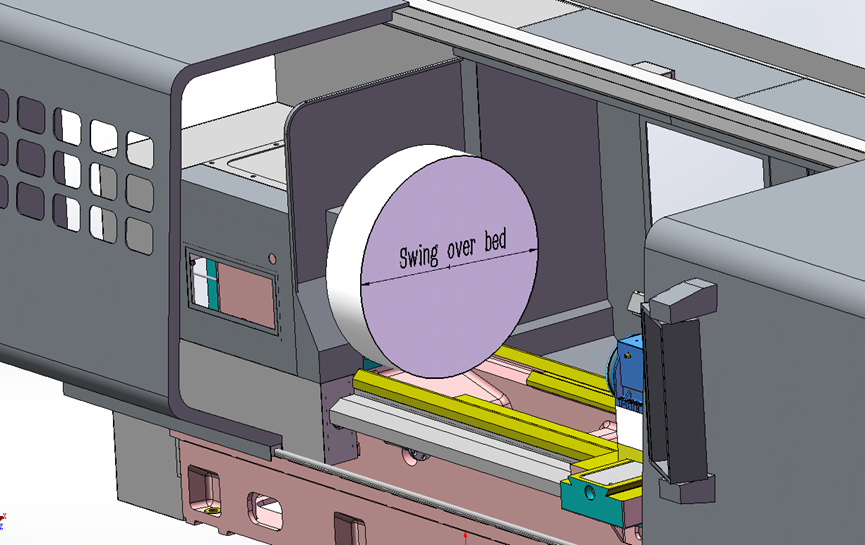
**Swing Over Bed** is the **maximum diameter of a workpiece that can rotate over the lathe bed without touching it**. It is measured as **twice the distance from the spindle centerline to the bed**. For example, if a lathe has a **500 mm Swing Over Bed**, it can theoretically rotate a workpiece up to **500 mm in diameter**. However, this does **not** mean you can machine a 500 mm part, because the cross slide and cutting tools reduce the actual machining space. When choosing a lathe, always consider **Swing Over Bed**, **Swing Over Carriage**, and **Swing Over Gap** together to ensure the machine fits your application.
---
## Why Does Swing Over Bed Matter?
Swing Over Bed determines the maximum size of workpiece a lathe can accommodate. Choosing the right size helps you:
- Prevent interference between the workpiece and the bed
- Improve machining safety and efficiency
- Avoid purchasing an oversized or undersized machine
- Leave room for future production requirements
---
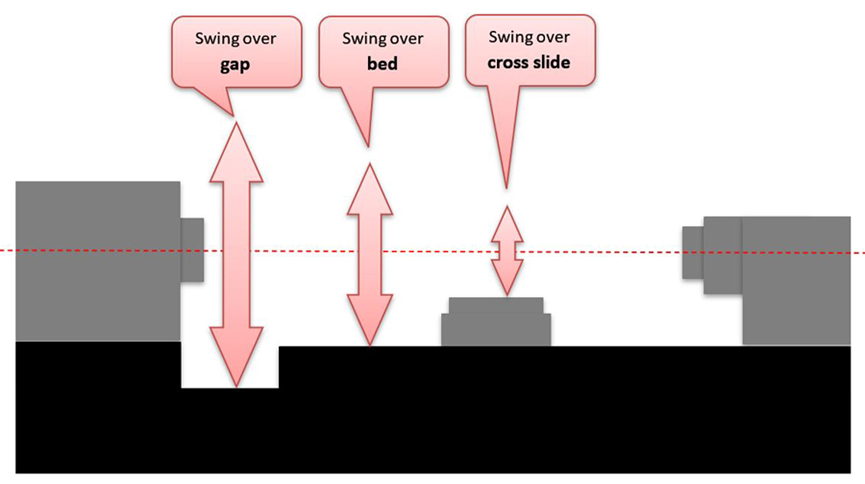
## Swing Over Bed vs. Swing Over Carriage vs. Swing Over Gap
| Parameter | Definition | Best For |
|-----------|------------|----------|
| **Swing Over Bed** | Maximum diameter that can rotate over the bed | Overall machine capacity |
| **Swing Over Carriage** | Maximum diameter above the carriage | Practical turning capacity |
| **Swing Over Gap** | Maximum diameter in the gap section | Large flanges or short oversized parts |
> **Tip:** Swing Over Bed shows the machine's capacity, while Swing Over Carriage is often a better indicator of actual machining capability.
---
## Real Example from Anyang Xinheng
At **Anyang Xinheng Machine Tool**, we offer lathes with different swing capacities to match various machining needs.
| Model | Swing Over Bed | Swing Over Carriage |
|-----------------------|----------------------------|---------------------------------|
| CKQ6140(300kg)| 400 mm | 210 mm |
| CK6180(3T) | 800 mm | 510 mm |
| CK61140(6T) | 1400 mm | 1030 mm |
| CKHJ61120(16T) | 2000 mm | 1600 mm |
These machines are widely used for machining shafts, hydraulic cylinders, rollers, and general mechanical components.
Explore more machine specifications at:


